



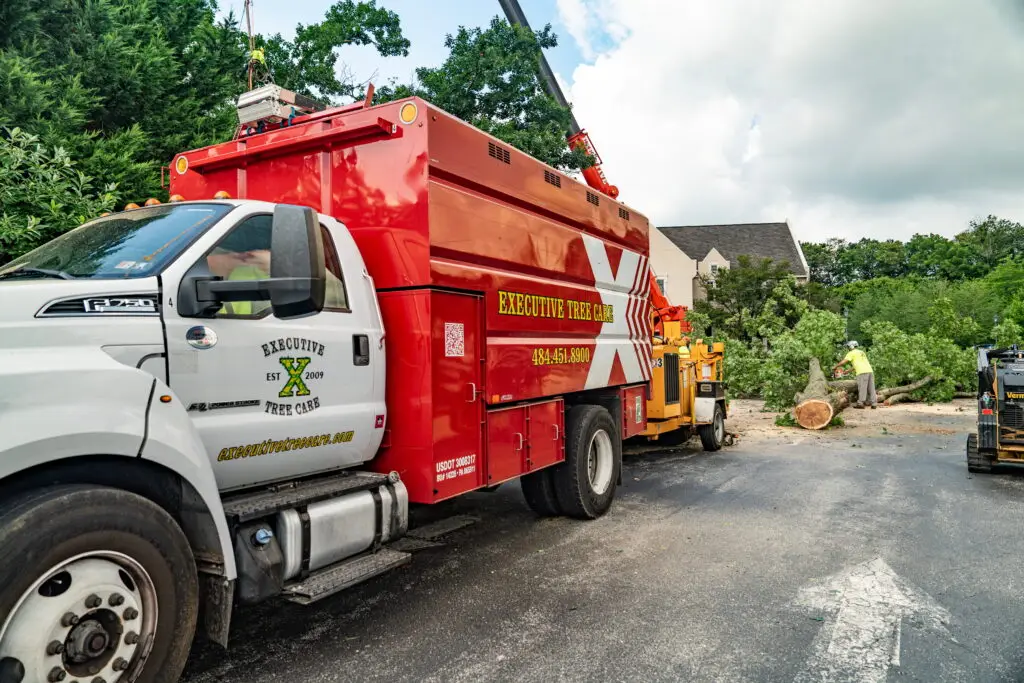
Storms don’t have to be major to cause major damage—especially when your trees are already compromised. The best time to check for risk isn’t after a tree falls, it’s before the next wind gust or snowstorm hits.
1. Leaning That Wasn’t There Before
A tree that starts to tilt suddenly—especially after a storm—is a red flag. This often means the root system has shifted or weakened. Even a slight lean can signal serious risk.
2. Cracks in the Trunk or Major Limbs
Splitting bark or visible fractures are early signs of structural instability. These can rapidly worsen under snow or wind pressure and lead to limb failure.
3. Dead or Hanging Branches (aka Widowmakers)
These are limbs that have snapped but remain suspended in the canopy. They can drop unexpectedly—especially after ice or snow build-up.
4. Soil Heaving Around the Base
If the ground looks raised or cracked around the trunk, it may be a sign that the tree has started to uproot. This is particularly dangerous and calls for immediate attention.
Be Proactive, Not Reactive
Executive Tree Care offers expert storm-risk evaluations and emergency removals across the Main Line, Delaware County, and surrounding areas.
📞 Get ahead of winter damage—contact us today for a pre-storm inspection.