



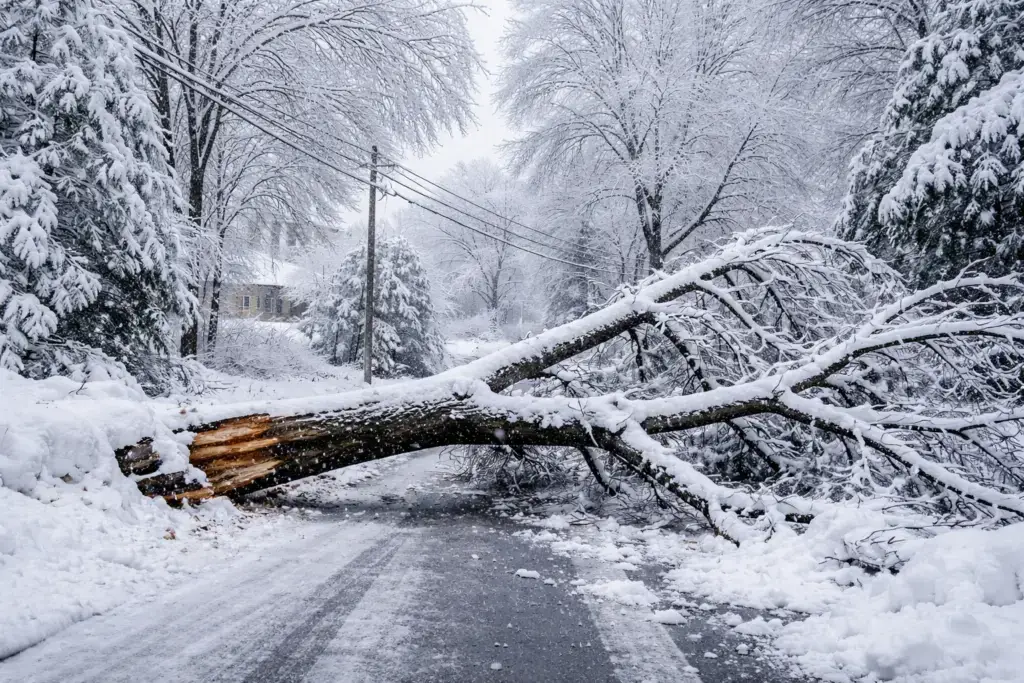
After a major snowstorm, most homeowners look for the obvious signs of damage—broken limbs on the lawn, fallen trees, or branches resting on power lines. But what’s even more dangerous are the hidden hazards still hanging in the canopy or quietly weakening your trees from the inside out.
If you live in Delco or the Main Line area—from Ardmore and Bryn Mawr to Villanova, Wayne, and Gladwyne—here’s what to watch for after the snow clears, and why it’s crucial to act before spring winds and thawing soil make things worse.
1. Split or Cracked Branches
Snow and ice put incredible stress on tree limbs. Even if a branch didn’t fall, it may have sustained a deep crack or split that’s not visible from the ground. These damaged limbs can fail days or weeks later—especially when the next storm or cold snap hits.
✅ What to do: Have a certified arborist inspect upper limbs for fractures that could pose a risk to your home, vehicles, or power lines.
2. Hanging or “Widowmaker” Limbs
Sometimes branches snap but don’t fall—they get caught in the canopy, hanging precariously overhead. These are known as “widowmakers” for good reason: they can drop suddenly and without warning.
✅ What to do: Stay clear of areas beneath large trees and don’t attempt to dislodge branches yourself. A professional team with proper equipment should remove them safely.
3. Soil Uplift Around the Trunk
Strong wind or heavy snow loads can cause a tree’s root system to shift, especially in saturated or thawing soil. If you notice raised soil or heaving at the base of the trunk, it’s a red flag that the tree may be unstable—and at risk of falling in the next storm.
✅ What to do: Schedule a tree stability evaluation ASAP. Trees with compromised roots can fall unexpectedly—even weeks after the snow melts.
4. Leaning Trees That Weren’t Leaning Before
Some lean is natural, but if a tree suddenly starts tilting after a snowstorm, it could signal root damage, loss of anchorage, or structural imbalance. This is especially common near driveways, fences, and structures in older Main Line neighborhoods.
✅ What to do: Don’t ignore new leaning. It could be the beginning of a full uprooting event. Bracing, cabling, or removal may be needed.
5. Bark Damage or Trunk Splitting
As snow and ice thaw and refreeze, bark can split vertically due to temperature stress, especially on younger or thin-barked trees. While it may seem minor, open wounds can invite disease and pests.
✅ What to do: A post-storm tree inspection can assess whether the damage needs treatment or monitoring. Early action helps avoid long-term health issues.
Don’t Wait for Spring to Find Out the Hard Way
Many of the tree failures we respond to in spring were the result of winter storm damage left untreated. The good news? These problems are preventable.
Executive Tree Care offers emergency tree assessments, pruning, and storm-damage removals throughout the Main Line—including Haverford, Radnor, Narberth, Bala Cynwyd, and Malvern. Our certified arborists can identify risks early and recommend safe, effective solutions.