



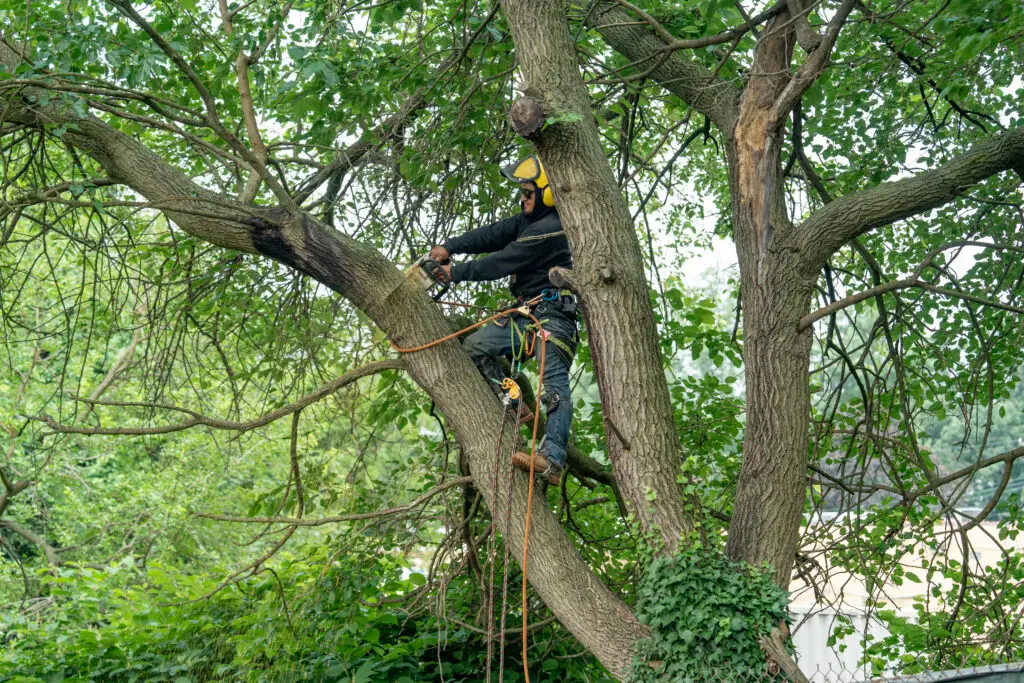
Trees add beauty and value to your property, but when a tree becomes unstable or unhealthy, it can pose a serious safety risk. In Delaware County, where storms and aging trees are common, knowing when it’s time to remove a tree can save you from property damage—or worse. Here are five clear signs it’s time to call a professional:
1. The Tree Is Leaning—Suddenly or Severely
A slight lean isn’t always a concern, but if your tree has recently started leaning or is tilting more than 15 degrees, it could be a sign of root damage or structural failure.
2. Large Dead or Hanging Branches
Dead limbs, especially those hanging high in the canopy, are often the first parts to fail during storms. If over 25% of the tree is deadwood, removal may be the safest option.
3. Trunk Cracks or Cavities
Visible cracks, holes, or decaying spots in the trunk could mean internal rot. Trees can look healthy on the outside but be hollow on the inside—making them unpredictable and dangerous.
4. Root Damage or Uplifted Soil
Exposed or damaged roots, or soil that appears heaved or cracked at the base, often signals a destabilized tree. These trees are more likely to fall, especially during high winds or heavy rain.
5. Fungal Growth at the Base
Mushrooms or conks growing near the trunk or roots may indicate internal decay. While not all fungi are harmful, certain types suggest the tree’s structure is compromised.